


High-Yield Savings Account Guide: A Smarter Way to Save in 2026
Whether you're building an emergency fund, saving for a major purchase or setting aside money for future goals, where you keep your savings matters. The right high-yield savings account can offer a combination of earning potential, accessibility and security. Understanding how these accounts work can help you determine whether they fit into your overall financial plan.
What is a High-Yield Savings Account?
A high-yield savings account (HYSA), also known as a high-interest savings account, is a savings account that offers a more competitive interest rate than a traditional savings account, while keeping your money accessible when you need it. This higher earning potential comes from the account’s Annual Percentage Yield (APY), a standard way banks show the savings account interest rate and how much your deposited money can earn over time.
High-Yield vs Traditional Savings Accounts
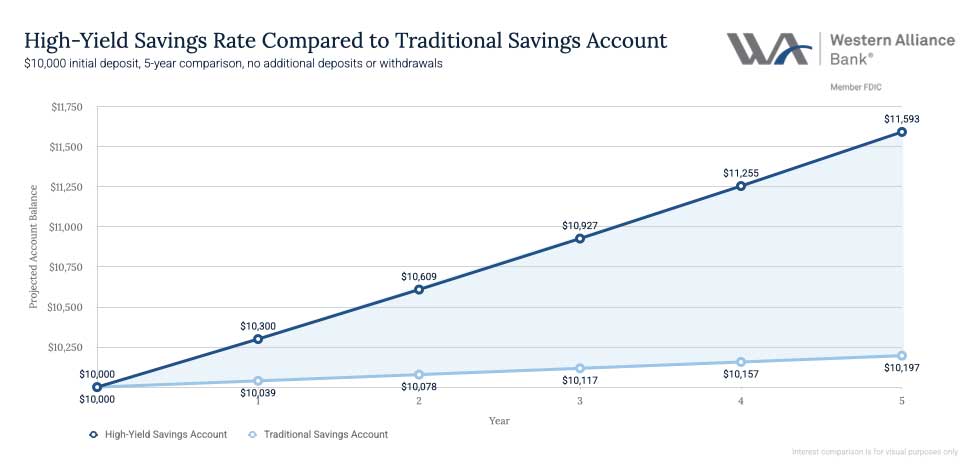
The key difference between a high-yield savings account and a traditional savings account is the earning potential, which is why many savers compare high-yield savings account rates before opening an account.
Money kept in a typical savings account may earn consistently little interest over time. In comparison, a high-yield savings account can offer stronger earning potential, giving your savings the opportunity to grow more interest.
How a High-Yield Savings Account Works?
Most HYSAs earn interest based on their Annual Percentage Yield (APY), which reflects both the interest rate, or yield, and the impact of compounding over time.
How Compound Interest Works
A high-yield savings account earns interest on the money deposited in the account. As interest is added to your account balance, future earnings are calculated on both your original deposit and previously earned interest. Over time, this compounding effect can help your savings grow more efficiently.
FDIC Insurance Protection
High-yield savings accounts are generally considered safe, especially when held at a Federal Deposit Insurance Corporation (FDIC) insured bank.
FDIC insurance is an important feature to look for when choosing a high-yield savings account, especially when comparing deposit accounts. For most consumers, FDIC insurance covers up to $250,000 per depositor, per ownership category, at each insured bank. For joint accounts with two owners, coverage can be up to $500,000 at the same bank.
Unlike market-based options like stocks or bonds, funds held in an FDIC-insured high-yield savings account do not lose value when the stock market fluctuates, allowing for both security and steady growth within these balances.
Keeping Your Money Accessible
Most HYSA and online savings accounts are built to keep your money readily available when you need it. A HYSA can offer flexibility for short-term and long-term goals, while a certificate of deposits (CDs) may be an option if you want a guaranteed rate of return and can keep funds locked in for a set period.
Key Features Include:
- 24/7 online access
- Easy fund transfers
- Quick account opening
- Flexible withdrawals
Who Benefits Most from a High-Yield Savings Account?
The right savings account for you starts with understanding your goals. Whether you’re building an emergency fund, saving for planned expenses or preparing for future opportunities, a high-yield savings account can help your money earn more while remaining accessible when you need it.
Common Ways to Use a High-Yield Savings Account
- Building an emergency fund
- Saving for a vacation or travel plans
- Preparing for a wedding or major life event
- Setting aside a home down payment

What to Consider When Choosing a High-Yield Savings Account
Before opening a high-yield savings account, it’s important to understand how the account fits your financial goals and compare key features across providers.
- The Annual Percentage Yield (APY) offered
- Review fees, minimum deposits or balance requirements
- Understand how withdrawals and transfers are handled
- Whether the account is offered by an FDIC-insured bank
High-Yield Savings Account Pros and Cons
Every high-yield savings account has its benefits and tradeoffs. Understanding both can help you determine whether it aligns with your financial needs.
Pros
- Higher Returns: High-yield savings account rates are often more competitive than traditional savings account rates, which can help your deposited funds earn more interest over time.
- Fewer Fees: Typically, HYSA avoids charging monthly account fees, though fees may vary by account and provider.
- Accessibility: The money in a HISA can be withdrawn or transferred without penalty, while still offering the convenience of online access.
Cons
- Variable Rates: HYSA rates and APYs are not locked and may fluctuate over time, so it is important to check with your bank for current high-yield savings account rates.
- Transfer Timing: ACH-based transfers may take several business days for deposits or withdrawals to process, which is important to keep in mind if you need same-day access to funds.
- Limited In-Person Banking: Unlike many traditional saving accounts, most HISAs are offered by online banks and may not include in-person branch support.
What You’ll Need to Open a High-Yield Savings Account
Opening a high-yield savings account only takes a few steps, depending on the bank’s model. In many cases, the process can be completed in just a few minutes. Here’s what to expect when beginning an application:
- Be a U.S. Citizen or permanent resident and at least 18 years or older
- Provide your Social Security Number
- Submit a current U.S. residential address (P.O. Box is not acceptable)
- Provide a valid email address and mobile number
- Link an existing checking or savings account
- Deposit an initial amount to fund your HYSA account and begin earning interest based on the account’s APY
Ready to Open a High-Yield Savings Account?
Explore Western Alliance Bank’s High-Yield Savings Account and take the next step toward reaching your savings goals with an online savings account.
Frequently Asked Questions
A savings account is a deposit account held at a bank that allows customers to set aside money while receiving security and interest.
A high-yield savings account offers a more competitive interest rate than a traditional savings account while helping you keep your money available for planned expenses, emergency funds or short-term goals.
A high-yield savings account generally offers a higher Annual Percentage Yield (APY) than a traditional savings account, helping your deposited funds earn more interest over time.
High-yield savings accounts are generally considered safe, especially when held at an FDIC-insured bank. Unlike stocks or bonds, funds in an FDIC-insured HYSA do not lose value because of stock market fluctuations.
High-yield savings accounts can be FDIC insured when offered through an FDIC-insured bank. For most consumers, FDIC insurance covers up to $250,000 per depositor, per ownership category, at each insured bank. Need more information, visit the FDIC website.
In most cases, a HYSA allows you to access, withdraw or transfer money without locking it away for a set period. However, ACH transfers may take several business days to process, so timing is important if you need same-day access.
The right amount depends on your financial goals. A HYSA can be a good place to build an emergency fund because it keeps your money separate from everyday spending while remaining accessible.
It depends on your savings goals. A HYSA may be a better fit if you want flexible access to your money, while a Certificate of Deposit (CDs) may be better if you want a guaranteed interest rate and can keep funds locked in for a set period.
Some potential downsides include variable APYs, ACH transfer timing and limited in-person banking support if the account is offered through an online bank.
A good APY is one that is competitive compared to traditional savings account rates. Since HYSA rates can change over time, it is important to check with the bank for current rates, fees and balance requirements.
Have Additional Questions? Call us at (866) 347-1476
Our U.S. Customer Service Support is open Monday-Friday between 6:00am to 6:00pm PT.

About Us
Western Alliance Bank
Western Alliance Bancorporation (NYSE: WAL) is one of the country’s top-performing banking companies and has ranked as a top U.S. bank by American Banker and Bank Director since 2016. Its primary subsidiary, Western Alliance Bank, is a leading national bank for business that puts customers first, delivering tailored business banking solutions and consumer products backed by outstanding, personalized service and specific expertise in more than 30 industries and sectors. With more than $90 billion in assets and offices nationwide, Western Alliance excels at helping businesses of all sizes capitalize on their opportunities to solve today and succeed tomorrow.